Advanced Tricks: Mastering Spell Timing for Perfect Attacks
10 min read Unlock expert-level attack precision with advanced spell timing techniques for perfect Clash of Clans raids.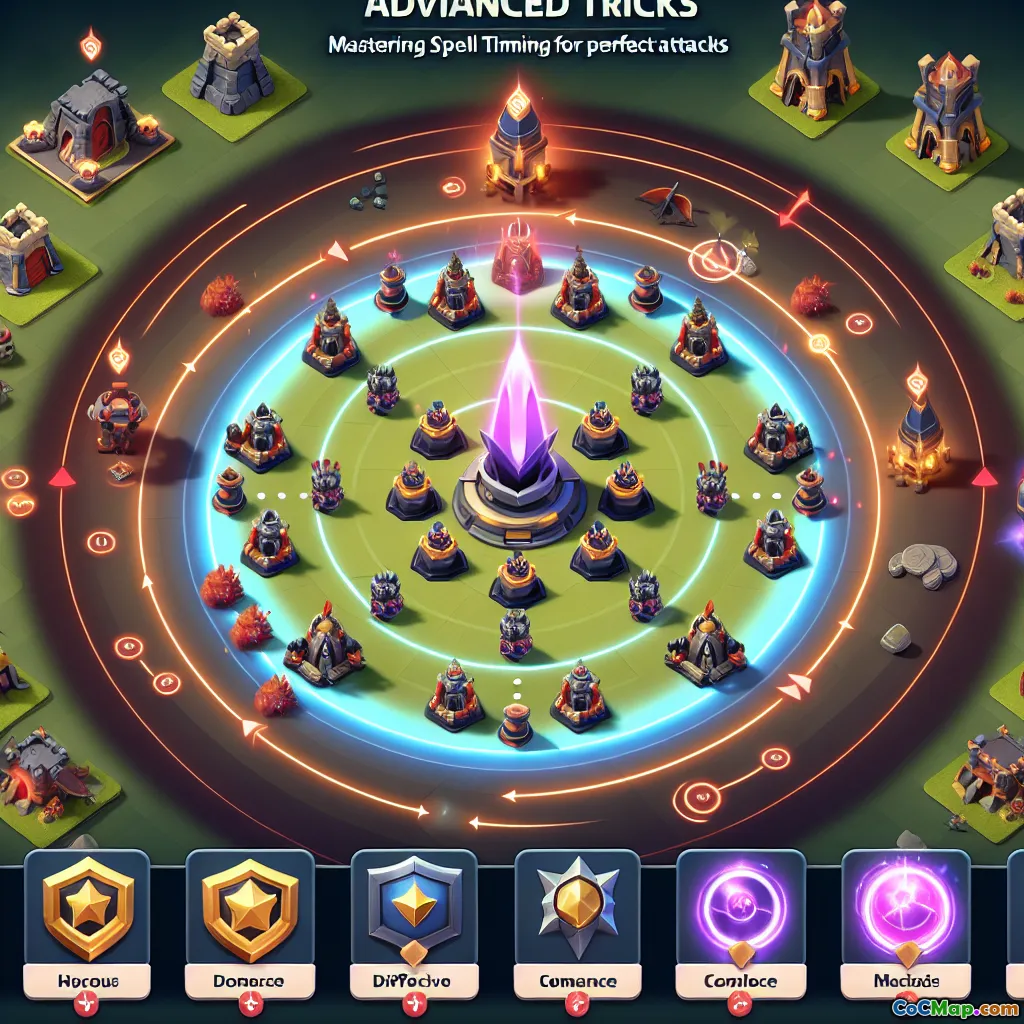
Advanced Tricks: Mastering Spell Timing for Perfect Attacks
Introduction
Have you ever watched a top-tier Clash of Clans player execute a flawless three-star attack and wondered, “How did they pull that off?” The answer often lies not just in troop composition or base reading, but in the subtle art of spell timing. In high-stakes wars and competitive leagues, the difference between a near-miss and a crushing victory is often measured in split-second spell drops. Spell timing isn’t just about when you cast—it’s about reading the flow of battle, anticipating threats, and unleashing power at the exact right moment. Ready to elevate your game? Let’s dive deep into the advanced science (and art) of mastering spell timing for perfect attacks.
Why Spell Timing Matters: The Hidden Edge
Many players focus on troop upgrades, base layouts, or even army composition. But spells are unique—they can instantly change the course of a raid. The right spell, deployed at the wrong time, is wasted potential. The right spell, at the perfect time, can turn disaster into triumph. Consider this:
- A premature Heal Spell: Troops heal before hitting the core, only to be wiped out by a Giant Bomb later.
- A late Freeze Spell: The Eagle Artillery fires, destroying your key units before you can react.
- Perfectly timed Rage: Your Queen Walk survives a CC ambush, carving a path for the rest of your army.
Mastering spell timing means squeezing every ounce of value from your spells—maximizing damage, minimizing losses, and controlling the tempo of battle.
Understanding Spell Mechanics: More Than Just a Drop
Duration, Radius, and Stacking
Each spell in Clash of Clans has unique mechanics:
- Duration: How long the spell’s effect lasts (e.g., Rage Spell: 18s, Freeze Spell: 7s at max).
- Radius: The area covered—critical for positioning (e.g., Heal Spell covers 5 tiles).
- Stacking: Some spells stack (multiple Heals), others don’t (multiple Rages overwrite).
Knowing these mechanics lets you plan spell overlaps, chain effects, and avoid wasted coverage.
Cooldown and Spell Queueing
There’s a brief delay (spell cooldown) between deploying spells. In high-pressure moments, queueing spells in advance or pre-selecting the next spell can prevent costly hesitation.
Pro Tip: Practice quick spell swaps in friendly challenges to build muscle memory.
Timing Each Spell: Advanced Techniques
1. Heal Spell: Anticipating Damage, Not Reacting to It
- When to Drop: Deploy Heal just before your troops enter high-damage zones (e.g., multi-target Infernos, Giant Bomb clusters).
- Example: In Hog Rider attacks, observe trap patterns and drop Heal as Hogs approach likely Giant Bomb spots—not after they spring.
- Why: Heals have a delay; troops need time inside the radius to benefit fully.
2. Rage Spell: Maximizing Movement and DPS
- Optimal Use: Place Rage so troops enter it as they engage key defenses, not after.
- Example: For Queen Walks, drop Rage before the Queen faces a CC + X-Bow combo. For Balloons, Rage ahead of their path to maximize time within the spell.
- Why: Rage boosts both speed and damage—anticipate where the fight peaks.
3. Freeze Spell: Interrupting, Not Delaying
- Best Timing: Freeze right as enemy defenses (Inferno, Eagle Artillery, Scattershot) are about to fire, not after.
- Example: In Lalo attacks, time Freeze to stop Scattershot mid-animation; in Hybrid, freeze CC troops as they start attacking.
- Why: A perfectly timed Freeze can save dozens of troops, while a late one is wasted.
4. Poison Spell: Preemptive Placement
- Top Technique: Drop Poison as soon as the Clan Castle is lured—not after troops have engaged.
- Example: Against Super Minions or Witches, position Poison to cover their spawn point and slow them before they reach your Queen.
- Why: Early Poison reduces incoming damage and prevents CC troops from overwhelming your heroes.
5. Invisibility Spell: Sequencing and Layering
- Advanced Use: Use Invisibility to shield key units (Queen, Super Archers, Blimp payload) at critical moments—timing overlaps to chain protection.
- Example: In Super Archer Blimp attacks, layer Invisibility so the payload stays hidden through multiple volleys, but don’t overlap and waste duration.
- Why: Invisibility’s short duration demands precise sequencing for maximum value.
6. Jump Spell: Pathing Before Arrival
- Strategic Drop: Place Jump ahead of your main force, allowing troops to flow seamlessly into the core.
- Example: In PEKKA Smash, drop Jump as PEKKAs approach walls, not after they’re stuck.
- Why: Delays in pathing can split your army; early Jump keeps momentum.
Combining Spells: The Power of Synergy and Chain Timing
Rage + Heal
- When: For attacks like Mass Hogs or Miners, drop Rage and Heal together as troops hit the core, facing splash damage.
- Why: The DPS boost from Rage is sustained by Heal, letting troops survive and clear high-value targets.
Freeze + Poison
- When: Against CCs with multiple threats, Freeze and Poison together can neutralize both damage and movement.
- Why: This combo is especially deadly versus Super Minions + Headhunters.
Invisibility + Rage
- When: For Blimp payloads or hero dives, make the target invisible and supercharged for maximum destruction.
Reading the Battle: Adaptation and Real-Time Decisions
High-level players don’t just follow a script—they adapt. Here’s how to read and react:
- Watch for Triggers: Identify when defenses are about to target key troops (e.g., Scattershot lining up Miners).
- Anticipate Chain Reactions: If a Giant Bomb triggers, be ready to Heal or Freeze the follow-up.
- Monitor Spell Cooldowns: Don’t get caught without a spell ready when the battle’s pace speeds up.
Example: In a Queen Charge, if the Queen is about to face a triple threat (CC + X-Bow + King), preemptively Rage and Freeze—don’t wait for her health to dip into the red.
Practice Drills: Building Your Spell Timing Muscle
- Friendly Challenges: Test spell timings against common base layouts without risking resources.
- Replay Analysis: Watch your own attacks and top players’ replays. Pause at key moments—ask, “Could I have timed this spell better?”
- Custom Timer Drills: Practice deploying spells in sequence with a stopwatch to simulate high-pressure timing.
Common Spell Timing Mistakes (and How to Avoid Them)
- Panic Casting: Dropping spells in response to troop losses, rather than anticipating threats.
- Overlapping Spells: Stacking spells with redundant effects (e.g., double Rage) and wasting value.
- Late Support: Waiting too long to Heal or Freeze, resulting in avoidable troop deaths.
- Neglecting Pathing: Using Jump or Invisibility too late, causing troops to split or get targeted.
Solution: Always plan spell timings during your attack setup—not just on the fly.
Conclusion: Elevate Your Raids with Spell Timing Mastery
Perfect attacks in Clash of Clans aren’t just about brute force—they’re about precision, planning, and the subtle mastery of spell timing. By understanding each spell’s mechanics, anticipating battle flow, and practicing real-time adaptation, you’ll unlock a hidden layer of strategic depth that separates good players from great ones. Next time you raid, challenge yourself: Can you time your spells just a little better? The path to three-star glory is paved with seconds—and those seconds are yours to command.