Jump Spells: Navigating Walls for Maximum Impact
19 min read Turn walls into highways. Master Jump Spell placement, timing, and pathing to drive ground armies deep and consistent two and three stars.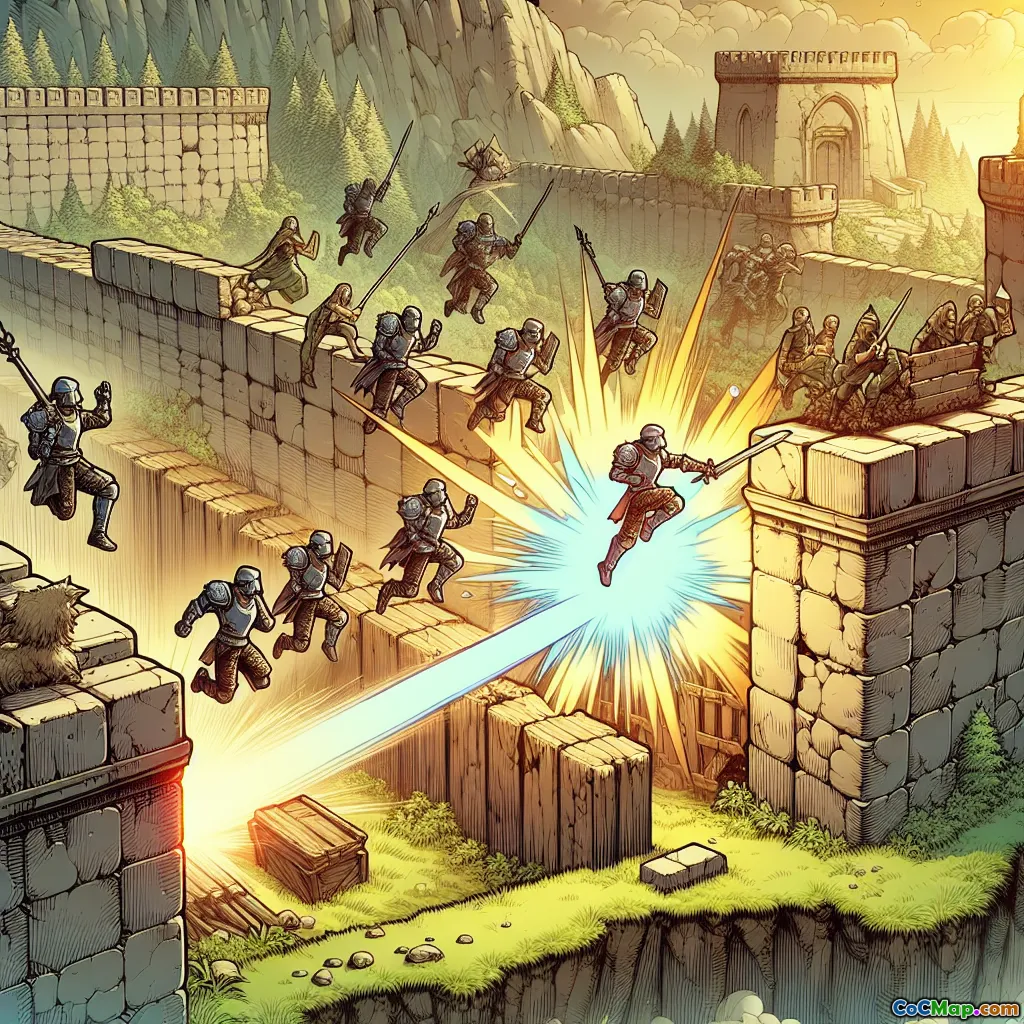
Jump Spells: Navigating Walls for Maximum Impact
Ever watched a flawless ground army march right up to the core, only to sidestep into a useless ring because of one stubborn wall? The Jump Spell is the quiet architect behind some of the most decisive three-stars in Clash of Clans—when you understand how to turn walls from barriers into highways.
This deep dive will show you how to plan, place, and time Jump Spells so your troops take the path you want, not the path they prefer. We will cover core mechanics, troop behavior, common pitfalls, and pro-level routing with Siege synergy.
Why Jump Spells Matter
Walls are the map. Every ground attack succeeds or fails based on how you interact with them. Breaking walls is one way. Ignoring them with Jump is another—and often the cleaner option when you want to:
- Bypass multiple layers quickly without committing to a Wall Wrecker or Log Launcher.
- Keep tanks in front of DPS by avoiding side-chasing and backtracking.
- Create a predictable, straight path to key objectives like Town Hall, Monolith, or multi-target Infernos.
Jump is most valuable when a single spell can unlock multiple compartments or force a compact route through the core. When used poorly, it opens the floodgates to side compartments and causes splits. The difference comes down to pathing logic and placement geometry.
Mechanics You Must Know
- Housing space: 2
- Affected units: Ground troops and heroes that cannot inherently jump walls (Giants, Golems, Valkyries, Bowlers, PEKKA, Yetis, Witches’ skeletons, Barbarians, etc.). Hogs already jump, Miners dig under, and air troops ignore walls—Jump does nothing for them.
- Duration: Scales with level, roughly from 20 seconds at low level to about a minute at higher levels. In practice, plan so your army reaches the spell area while it is still active.
- Radius: Large enough to bridge broad wall sections; higher levels extend reach, letting you span thicker or multiple layers more reliably.
- How it works: Any wall edges that intersect the Jump ring are treated as “open” for pathfinding. Troops evaluate travel time to targets; if crossing the Jump is faster than walking around or breaking a wall, they will use it.
Key implication: A Jump is not a teleport. It creates virtual “doors” wherever the green ring touches walls. If the ring does not touch both sides you intend to connect, troops might not path through.
Pathing Logic: How Troops Decide
Understanding how your army thinks is the heart of Jump usage.
- Troops pick a target based on effective travel time (not just distance). Walls, speed buffs, and Jump all change this math.
- They reevaluate targets as they move. A Jump opened too early can tempt troops to peel off into a closer side building when they reach its edge.
- Troop personality matters:
- PEKKA, Giants, Yetis, Golems: Non-ranged bruisers; Jump gives them straight lines to core tanks/defenses.
- Valkyries: Love tightly packed targets. A well-placed Jump that connects clustered structures can produce devastating spins.
- Bowlers: Prefer straight lanes where bounces chain through defenses; Jump can create that bowling alley.
- Witches and skeletons: Skeletons happily use Jump and trigger traps; consider timing and funneling to keep them covered.
- Heroes: King and Warden (ground) will use Jump; Queen can target over walls but often benefits from Jump to maintain tight pathing and healer safety.
- Hogs/Miners: Jump is mostly wasted; they already ignore walls by design.
Placement Geometry: Where To Drop Jump
Think of Jump as a bridge, not a net. Precise placement beats big radius.
- Touch both sides: Ensure the ring overlaps wall segments on both compartments you want connected. Slightly bias the spell deeper into the base so troops step in rather than skirt the outside edge.
- Span multiple layers: With a higher-level Jump, you can bridge two wall layers by centering between them so the ring touches both. This is huge on box and diamond cores.
- Anchor on intersections: Placing Jump at a wall junction can open three or more compartments at once. Great value—but only if your funnel is air-tight.
- Avoid leakage: If the ring accidentally touches side walls, your army may bleed sideways. Shrink the angle by funneling buildings outside the intended lane.
Pro tip: Visualize a straight line from entry to the Town Hall/core scatter/monolith. Your Jump should sit on that line, not off to a corner.
Timing: Early, Mid, or Late?
- Early Jump: Useful when you need to guarantee an immediate entry across a thick ring or compartment wall, especially when skipping Wall Breakers. Risk: troops can be drawn sideways if the funnel is not ready.
- Mid-fight Jump: Standard in Smash attacks—drop as the first layer is cleared and your tanks are approaching the core. This keeps your army moving without pausing to retarget.
- Late Jump: For back-end routing, connecting the final compartments to avoid time fails or to reach a distant multi/RC. Works well with cleanup waves.
General rule: Sync Jump with your Rage/Heal windows. A Jump inside a Rage accelerates the crossing and shortens the time troops spend exposed to splash and single-target locks.
Single Jump vs. Double Jump Routing
- Single Jump Value: Aim to open two to three compartments or bridge a thick core ring. Ideal for TH9–TH10 GoWiPe, TH11 Pekka Bowler, and many TH12 Yeti Smashes when you have one major intersection to cross.
- Double Jump Chains: One Jump for entry, the second for the back half of the core. This is classic on box bases where a central ring would otherwise push your army around the Town Hall. Place the second Jump slightly beyond the core to encourage forward momentum, not backtracking.
Example route on a box base:
- Funnel one corner with a Flame Flinger or Yeti plus Wizards; funnel the opposite side with a Baby Dragon.
- Smash entry at the near-side face with Warden walk, then drop tanks and Bowlers.
- First Jump across the first wall to reach the core ring.
- Rage through the core, Warden ability on Town Hall bomb or splash cluster.
- Second Jump connecting the opposite side compartments for exit into the RC and remaining splash.
Choosing Jump vs. Alternatives
- Jump vs. Wall Breakers/Super Wall Breakers: Breakers are cheap in troop space and can open a single wall precisely, but they are fragile and can fail under splash or traps. Jump is safer if you must guarantee multiple-layer access. If a single compartment is enough, Super Wall Breakers often win the value war.
- Jump vs. Siege Machines:
- Wall Wrecker: Physically opens a tunnel; great for straight-line cores but can be slowed or destroyed. If your core is stacked with Giant Bombs and heavy DPS, a Log Launcher or Jump may be safer.
- Log Launcher: Creates a long channel and chips defenses from range. Combined with a mid-core Jump, you can cross rings and keep momentum without exposing the Siege too long.
- Battle Blimp/Stone Slammer: Air sieges bypass walls, making Jump less necessary in air-centered plans. Still consider Jump for a ground kill squad if you’re running hybrid or a Queen charge into blimp.
- Jump vs. Rage/Freeze: For some comps, an extra Rage or Freeze yields more survivability or DPS. Bring Jump only if it materially improves pathing to high-value targets.
Rule of thumb: If Jump lets you touch 3+ compartments or span two layers of walls, it usually outvalues an extra Freeze.
Synergies That Elevate Jump
- Rage + Jump: Speed and damage through the bridge; minimizes time in kill zones.
- Healers + Jump: Keeping your Queen or Smash under Jump prevents awkward retargeting and keeps healers in range as tanks don’t lag behind.
- Skeleton Spells + Jump: Use Skellys to distract singles and ground-target defenses while your army crosses the Jump safely.
- Invisibility + Jump: On rare, high-skill plays, invis can focus your Queen or Super Wizards while the main army uses Jump to pass by dangerous tiles.
Town Hall-Level Use Cases
- TH9–TH10: Classic GoWiPe/GoVaWi. One well-placed Jump converts clunky, multi-breaker entries into smooth core dives. Aim to open the Town Hall compartment and at least one adjacent.
- TH11–TH12: Pekka Bowler and Yeti Smash. Double Jump routes are common on box and ring bases. Pair with Warden ability over TH/Eagle.
- TH13–TH14: Log Launcher reduced reliance on Jump, but a back-end Jump remains strong to exit the core towards Royal Champion and scattershots.
- TH15–TH16: With Monolith and Spell Towers, speed through danger is critical. A Jump that avoids detours keeps tanks in front so heroes and healers don’t get sniped by an enraged core. Consider Jump when base designs funnel you into poison or rage towers if you take the long way around.
Base Styles and How to Crack Them
- Anti-2 Ring Bases: Place a Jump that touches the inside ring, not the outer layer. Your goal is to pierce to TH and exit, not just step inside and spin. Double Jump works best—one to enter, one to exit.
- Box Bases: First Jump on the initial layer, second Jump behind the core to reach RC and scatter clusters. Make the exit Jump slightly offset toward remaining splash to prevent pathing back.
- Diamond Bases: A single intersection Jump at the junction of two core walls can open 3 compartments; funnel hard to prevent slipping into wings.
- Compartment Mazes: Skip breaker micro—drop a central Jump that lets tanks pinball from one compartment to the next while ranged troops clean up behind.
Common Mistakes and How to Avoid Them
- Misaligned Ring: The Jump doesn’t touch both walls. Fix: Tilt the spell deeper so the inner edge catches the deeper wall line.
- Premature Drop: Troops aren’t there yet; side buildings become closer targets. Fix: Count seconds based on troop speed and Rage timing; drop as tanks near the wall.
- Over-Opening: Jump accidentally touches side compartments. Fix: Tighten funnel and center the ring to only the lanes you want.
- Ignoring Troop Mix: Bringing Jump for Hog/Miners is low value. Fix: Tailor spells to army behavior.
- No Exit Plan: Army reaches TH but stalls or spins. Fix: If you Jump in, plan a second Jump or a Siege channel to Jump out.
Practical Placement Drills
- Sandbox Visualization: In friendly challenges, drop a Jump on empty spots to learn how much wall the ring touches at different angles.
- Compartment Math: Count how many compartments your Jump meaningfully connects. Aim for 3+. Less than 2 is usually not worth two spell slots.
- Hero Sync: Time King/RC to enter right after tanks cross a Jump, so they do not get stuck on outer trash.
Sample Attack Plans
- TH12 Pekka Bowler on Box Base
- Entry: Warden walk on a corner to trim; Baby Dragon opposite corner.
- Smash: PEKKA + Bowlers with Healers; first Jump over initial wall line.
- Core: Rage + Warden ability on Town Hall bomb; drop second Jump behind TH toward scatter.
- Cleanup: Wizards and minions on flanks; RC sent where defenses remain heavy.
- TH15 Yeti Smash vs Ring
- Siege: Log Launcher from entry to chip core.
- Jump: Mid-core Jump slightly offset toward Monolith to keep momentum.
- Spells: Rage across the bridge; Freeze on Spell Tower if it threatens healers.
- Exit: Use RC with a late Invisibility to secure a major compartment the army would otherwise ignore.
- Queen Charge into Smash
- Charge: Super Wall Breaker for first layer; hold Jump for mid-core connection to avoid triple-breaker risk.
- Smash follow: As Queen secures a flank, Jump the Smash into the core so healers can easily swap to tanks if needed.
When Not to Bring Jump
- Air-centric comps: Lalo, Dragons, and E-Drags typically prefer more Freeze/Rage/Haste value. Only consider Jump for a small ground kill squad if it unlocks the TH or a key core.
- Single-compartment targets: A single Super Wall Breaker is usually enough.
- Open-layout bases: If the base already funnels your army naturally, extra Rage/Freeze will outperform Jump.
Quick Decision Framework
Ask these questions during scout:
- Can one Jump connect 3+ compartments or span two wall layers I care about?
- Will it keep tanks and DPS grouped on the shortest line to TH and splash?
- Do I have a clean exit path, or do I need a second Jump?
- Would a Siege or Super Wall Breaker achieve the same for fewer resources?
If the first two answers are yes and the last is no, bring the Jump.
Final Pro Tips
- Stack value with heroes: Aim Jump so King and PEKKA both benefit; they anchor pathing for the rest.
- Use Rages at the bridge: Faster crossing equals fewer losses to core splash.
- Respect duration: If your army is slow, place Jump earlier; if fast, place later to avoid side aggro.
- Test in friendly: Two or three dry runs will reveal leaks you might miss on paper.
Conclusion
The Jump Spell is not just a convenience—it’s a pathing tool that rewrites how your army sees the map. Place it like a bridge at the exact moment your troops need a door through the base, and you’ll turn messy spins into straight-line demolitions. Master a single Jump first, then graduate to double Jump chains on complex cores. When you consistently count compartments, anchor intersections, and sync with Rage and Warden timings, walls stop being a problem—and start being your blueprint for three stars.
Ready to level up? Load a friendly challenge, draw a straight line through a tough base, and practice placing your Jump exactly where that line meets the walls. Your next perfect hit is one green circle away.