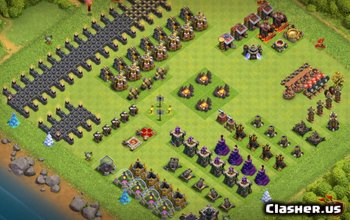
Spring Trap Placement Tips to Surprise Attackers
10 min read Master the art of Spring Trap placement in Clash of Clans. Outsmart attackers and protect your loot with expert strategies.
Spring Trap Placement Tips to Surprise Attackers
Introduction
Ever wondered why some bases seem to launch your troops into the sky with uncanny precision, while others barely make a dent in your army? The answer often lies in the subtle art of Spring Trap placement. While easily overlooked, these humble devices can turn the tide of battle—if used with cunning. What if you could predict exactly where your opponent’s troops will step, and greet them with a one-way ticket off the battlefield? Let’s dive deep into the world of Spring Trap placement and discover how you can outsmart even the savviest attackers in Clash of Clans.
Understanding Spring Traps: Mechanism and Value
Before we get tactical, it’s crucial to understand what makes Spring Traps unique:
- Instant Ejection: Spring Traps instantly remove up to three housing spaces worth of ground troops (e.g., Giants, Hog Riders, Bowlers, Valkyries) from play. No damage—just gone.
- Selective Targeting: They only affect certain ground units. Heroes, Golems, and PEKKA are immune, as are air units.
- Invisible Until Triggered: Spring Traps are hidden until a troop steps on them, making their placement a game of prediction and psychology.
A well-placed Spring Trap can eliminate thousands of hit points in an instant, disrupting attack plans and saving your base from disaster.
The Psychology of Pathing: Predicting Troop Movement
Why Pathing Matters
Attackers rarely send troops randomly. Most deploy in ways that funnel units toward key defenses or objectives. Understanding common pathing patterns is the foundation of expert trap placement.
Example:
- Giants and Hog Riders are often funneled along defensive lines toward splash damage buildings or the core.
- Attackers may clear outside buildings to direct their main force through a specific gap.
Pathing Prediction Tips
- Observe Replays: Watch how attackers approach your base. Where do Giants and Hog Riders typically enter?
- Identify Choke Points: Look for narrow passages between defenses—these are prime Spring Trap zones.
- Anticipate Wall Breaks: Attackers love to open walls near high-value targets. Place traps just beyond likely wall break points.
Optimal Spring Trap Placement: Key Principles
1. Between Defenses, Not in the Open
Spring Traps are most effective when placed between two defenses, especially those that attract tanky troops (e.g., Cannons, Archer Towers, Wizard Towers). Troops moving from one defense to another are forced to walk over the trap.
Why?
- Troops target the nearest defense, not random empty tiles.
- Placing traps in open spaces risks them being triggered by low-value units or missing entirely.
Example:
- Place a Spring Trap between a Cannon and a Mortar, where Giants are likely to walk.
2. Avoiding Trash Troop Triggers
Spring Traps can be wasted if triggered by single Barbarians or Goblins. To avoid this:
- Place traps where only high-housing space troops are likely to walk.
- Avoid outer edges or near resource collectors.
Pro Tip: Use small gaps in your walls to channel big groups of Giants or Hog Riders through a specific tile with a Spring Trap.
3. Pairing with Walls and Funnel Points
Walls are natural guides for troop movement. Place Spring Traps just inside wall gaps or at the end of wall segments where troops are funneled.
Example:
- If you have a double wall gap (common in anti-3-star bases), place a Spring Trap in the second gap where troops regroup after breaking the first layer.
4. Synergizing with Other Traps and Defenses
Combine Spring Traps with Bombs or Giant Bombs for layered defense:
- Place a Spring Trap after a Bomb, so weakened troops are ejected after taking damage.
- Use alongside splash damage defenses to maximize disruption.
Example:
- Hog Riders trigger a Bomb, survive with low HP, then are launched by a Spring Trap into oblivion.
5. Rotating and Testing Trap Placement
Don’t set and forget your traps. Rotate their positions periodically based on replay analysis. If attackers consistently avoid or trigger them with low-value troops, it’s time to adjust.
Tip:
- After every defense, review the replay. Did the trap hit Giants or just Barbarians? Move accordingly.
Advanced Placement Strategies by Troop Type
Anti-Giant Placement
- Place Spring Traps on the shortest route between two high-HP defenses.
- Avoid placing near storages, as Giants may detour for loot and miss the trap.
Anti-Hog Rider Placement
- Place traps on the direct path between defenses within Hog Rider range (i.e., defenses close together).
- Hog Riders move quickly, so traps should be in tight clusters of defenses.
Anti-Bowler & Valkyrie Placement
- These troops often follow the same path as Giants but can spread out. Place traps at choke points where their movement is forced into a line (e.g., narrow corridors).
Anti-Mass Attack (Hybrid/Spam)
- In hybrid attacks (Hogs + Miners), place Spring Traps where only Hogs are likely to go, not where Miners can trigger them underground.
- For spam attacks, use traps in secondary layers to catch troops after initial waves clear outer defenses.
Common Mistakes and How to Avoid Them
1. Placing Traps Too Close Together
Multiple traps in a single tile or adjacent tiles can be triggered by the same troop, wasting potential. Spread them out to cover more paths.
2. Ignoring Troop AI Updates
Supercell occasionally updates troop pathing logic. Stay current with patch notes and adjust placements as needed.
3. Over-Reliance on Copy-Paste Layouts
Copying base layouts from top players is tempting, but what works at Town Hall 14 may not work at TH9. Adapt placements to your base’s unique layout and defense levels.
Real-World Examples: Lessons from Top Defenders
- Legend League Base: Top players often hide Spring Traps in secondary compartments, not at the first line of defense. This catches troops after they break through, when attackers are least expecting it.
- War Base: In Clan Wars, traps are often placed near high-value targets (Eagle Artillery, Inferno Towers) to disrupt hero dives or Hog Rider pushes.
- Farming Base: Place traps along likely Giant or Goblin paths to protect storages, but avoid obvious collector routes.
Conclusion: Outsmart, Adapt, and Dominate
Mastering Spring Trap placement is both science and art. It requires understanding troop AI, predicting attacker behavior, and adapting to evolving strategies. By placing traps where attackers least expect, and constantly refining your setup based on real battle data, you transform your base from an easy target into a fortress of surprises.
Key Takeaways:
- Study troop pathing and base replays to predict movement.
- Place Spring Traps between defenses and at choke points—not in open or obvious spots.
- Combine traps with walls and other defenses for maximum disruption.
- Regularly rotate and test placements for optimal results.
Ready to turn the tables on your next attacker? Start experimenting with these tips, watch your defense logs, and enjoy the satisfaction of seeing enemy troops launched sky-high—one perfectly placed Spring Trap at a time.