What Every Clan Leader Should Know Before Assigning War Attacks
20 min read A practical war-leader playbook to assign targets that win stars, not just attacks.
Introduction
What wins a war is not the number of good attackers you have, but how their attacks are arranged. Have you ever lost a 30 star race by a few percentage points and thought, we had the firepower, but our hits were out of order? Assigning war attacks is a leadership skill that blends scouting, math, psychology, and time management. Get it right, and your clan feels effortless momentum. Get it wrong, and even strong players leave triples on the table.
This guide is a practical playbook for clan leaders who want to assign targets that win stars, not just fill attack slots. You will learn how to read bases, map player strengths, set attack order, reserve cleanup smartly, and adjust mid-war without panic. Whether you play regular wars or CWL, you will walk away with a system you can apply today.
The Leader’s Framework for Assigning Hits
Before calling any targets, anchor your decisions in a simple framework: assess roster, assess enemy map, choose win condition, and schedule for execution.
- Roster snapshot: Who is opted in, what Town Hall levels, hero and pet status, spell and siege access, and what each player reliably triples. If a player cannot use a siege or has heroes down, that changes assignment.
- Enemy map: Identify base archetypes and risk zones that align or clash with your roster’s strengths.
- Win condition: In regular wars, you need stars first, then total destruction as tiebreaker. In CWL with one attack per player, risk needs to be managed more tightly. Your calling style must match the win condition.
- Schedule: Define attack windows, who hits first, who holds for cleanup, and your final hour plan.
When leaders skip any one of these, assignments drift from strategy to guesses.
Know Your Roster: Building the Player Matrix
A great call sheet starts with a live, accurate map of your clan’s capabilities.
- Comfort comps: Track which strategies each player can execute under pressure. Label them by confidence: main (triple-capable), secondary (good two star with chance to triple), and emergency (safe two star). Examples: Queen Charge Lalo, Smash with Super Bowlers, Zap Titans, E-Dragons, Super Archer Blimp into Lalo or Hogs.
- Readiness factors: Check heroes and pets, especially at high TH. A TH16 without a properly leveled Royal Champion or key pets changes hit equity drastically. Confirm siege access and donations are covered.
- Expected star equity: Rough, roster-level guidelines help. For equal-level matchups in active clans, mid-skill triple rates often hover around 20–35 percent at TH15–16, and 35–55 percent at TH13–14. Use your own data first; every clan skill curve is different.
- Time zones and reliability: An elite attacker who always hits in the last 15 minutes might be a cleanup asset but a scheduling liability if you need early scouts.
Build a simple matrix: each player gets a lane (comps they can triple with), a safe fallback (dependable two star), and a time window commitment.
Reading the Enemy Map: Base Archetypes and Assignments
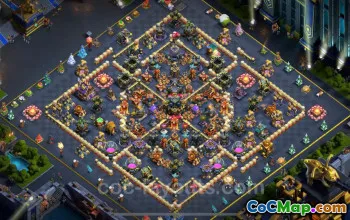
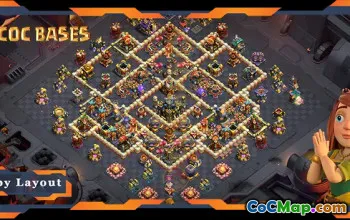
Assigning well begins with fast, accurate base identification. Tag each base with a short label and a plan.
Common archetypes and cues:
- Anti-three spread with compartment sprawl: Often punishes smash that runs out of time. Lean toward lalo variants with path control or hybrid that leverages multiple entry points.
- Anti-two ring with Town Hall centralized: Evaluate if spell towers and monolith create a death zone. Many rings are susceptible to Super Archer Blimp setups or blizzard into lalo if entry is protected.
- Box base with stacked value side: Hybrid excels if you can remove one side and collapse the middle. Bowlers can work if you break the box and anchor healers.
- Teaser Town Hall fronts: Beware tornado traps and invisible towers baiting blimps. Plan for safe blimp routes with coco loons, or switch to ground to secure the Town Hall.
- Air trap concentration: If you see long air pathing and isolated ADs, expect heavy red mines. Consider ground or a safer hero walk to disarm angles.
For each base, write a single-sentence note: base type, likely trap zones, preferred comp, and who in your roster fits. Example: Box base, anti-charge core with multis and rage towers, zap titans by Player A or hybrid by Player B.
Win Conditions: Secure the War Before You Style It
- Regular wars: Two attacks per player. Use early hits to unlock information and force adaptation. Hold 3–5 flexible hitters for cleanup, depending on war size. Aim to clear your tier efficiently: top vs top to remove pressure, then cascade down for efficient cleanups.
- CWL: One attack per player. Scouting is gone, so your error margin shrinks. Prioritize safe two stars on the highest bases your roster can handle, then assign your highest triple hitters to medium-tough targets where a triple is most likely, not necessarily the highest base. Overstretching for a low-probability triple at the top can cost a key star.
Always ask: Which arrangement maximizes expected stars if a plan underperforms?
The EV Mindset: Expected Value for Assignments
You do not need a spreadsheet mid-war, but you should think in expected value terms. A simplified way:
- For an attacker on a given base, estimate chances of 3, 2, or fail. Use a conservative lens based on past performance and base fit.
- Expected stars equals 3 times P3 plus 2 times P2. When two options are close, choose the one that maintains better cleanup flexibility for others.
Example: If Player X on enemy 3 has a 30 percent triple, 65 percent two star, 5 percent fail, expected stars equal 2.25. On enemy 4, that same attacker might be 45 percent triple, 50 percent two star, 5 percent fail, expected stars equal 2.4. The second is higher EV and also may leave enemy 3 for a different specialist.
Attack Order: Why Timing Wins Wars
Bad order loses good wars. A proven flow:
- Early scouts on mid map: Use confident attackers on bases that reveal the most information for cleanup, especially air traps, tornado, skeletons, and Tesla farms. Avoid wasting top hitters on high-variance fresh triples early unless they are required to relieve pressure.
- Top-tier safe hits: If your top player can secure a high-percentage two star at the enemy top, do it early to kill anxiety and protect the win path.
- Flexible triple attempts mid-war: After you learn trap patterns and entries, send your high-equity triple comps.
- Final hour cleanup: Hold 2–4 hitters with multiple comp options. Assign cleanups specifically, not vaguely. Tell them exactly what scout gave them: path cleared, traps triggered, spells to adjust.
Scheduling tips:
- Set clear windows: first wave in hours 1–8, second wave in 9–20, cleanup in 20–24. Adjust for time zones.
- Lock targets: When a plan is posted and approved, lock the hit to avoid double calls.
- Time insurance: Keep one dependable two-star player unused until the last stretch, in case a Town Hall is not down on a high base.
Matching Players to Bases: The Fit Over the Flex
Fit beats flashy. Match by:
- Comp fit: A queen charge specialist should not be forced into E-Drag spam just to attack earlier. Use their best weapon where it shines.
- Entry requirement: Some bases demand spell precision or high queen ability timing. Assign to players who can manage that under pressure.
- Siege needs: If a plan needs a specific siege and your donation pipeline is tight, confirm availability before locking.
- Hero health: Do not assign tough charges to players with weak queen or low warden. Pets matter at high TH; lack of Phoenix or Poison Lizard can alter survivability.
Cleanup: The Most Underrated Part of Calling
Cleanup is not just a second try. It is a data-driven attack that removes risk.
Use the scout to:
- Confirm trap triggers: Document tornado, red mine clusters, spring traps on hybrid paths, giant bomb stacks near key objectives.
- Adjust spells: If the scout discovered double poison towers near core, plan a rage or invis timing change for the RC or blimp path.
- Fix time sinks: If time failed at 95 percent because of an uncut corner, assign a small early funnel or a late cleanup wizard to avoid repeats.
- Upgrade the plan: Small tweaks can unlock a triple. For example, switch blimp entry to a safer angle after seeing sweeper direction and air trap placement.
When assigning cleanups, be explicit: Player C takes enemy 7 cleanup using hybrid, hold 1 extra hog to trip spring set, freeze for multi and builder huts, RC through back inferno.
Communication: Call Sheets, Notes, and Proofing
Leaders must reduce chaos. A simple, repeatable workflow:
- Call sheet: Post target, attacker, composition idea, siege, spell count, and planned hit window. Example: Enemy 5, Player D, zap titans, log launcher, 3 rage 2 jump 1 freeze, hit by hour 12.
- Proofing: Require a plan screenshot or typed steps. A second set of eyes catches missing funnel or spell overlap.
- Friendly challenge practice: If a base style matches a clanmate’s FC, practice the opener. One clean FC often boosts triple odds dramatically.
- Lock and update: Mark assignments as done, in progress, or open for reassignment. If a player misses their window, reassign early.
CWL Specifics: One Shot, No Scouts
CWL punishes greed. Tighten your process:
- Target bands: Group players into bands by safe star range. Top band should secure high twos on enemy tops; mid band hunts high-probability triples on mid map; lower band cleans predictable two stars.
- Avoid coin flips: If a high base needs a hero micro-perfect charge and your attacker has not practiced it recently, downshift to a safer plan.
- Percent management: When stars are equal across the league day, percent matters. Assign a few percent farmers with reliable 90 plus two star strategies.
- Roster rotation: Bench based on form, not only TH level. One misassigned coin flip per day can decide promotion versus relegation.
Example Assignment Flow for a 15v15 Mixed TH War
Scenario: You have TH16 x3, TH15 x5, TH14 x4, TH13 x3. Enemy is similar.
- Set win condition: Aim for at least 9–11 triples and all other attacks securing high twos.
- Lock safe tops: TH16 Player 1 secures a safe two on enemy 1 using charge lalo with safe blimp through warden ability. Do this early.
- Early scouts mid map: TH14 Player A and TH15 Player B hit enemy 8 and 9 with hybrid to reveal trap sets and test ground viability.
- High-equity triples: After scouts, assign TH16 Player 2 to enemy 2 using super archer blimp into lalo if traps permit; backup is smash if tornado is in core funnel.
- Cascade down: TH13s clear 12–15 with reliable hogs or E-Drags, depending on air sweeper and AD layout.
- Final hour: Hold TH15 Player C and TH16 Player 3 for cleanup on whichever base shows the most value from scout replays. If enemy 3 still stands with 80 percent two star, aim for a methodical upgrade rather than a new risky plan.
Common Pitfalls Leaders Should Avoid
- Forcing mirror hits blindly: Mirror is a starting point, not a rule. If a better fit exists, use it.
- Overcommitting top hitters early: If they miss and you have no cleanup flexibility, you lose tempo.
- Ignoring siege logistics: Assigning three log launchers when only two are available wastes time and nerves.
- Leaving no cleanup: Treat the last hour as decisive. If all hitters are spent, you cannot capitalize on scout data.
- Assigning beyond skill: Stretch goals are for friendlies and scrims, not crucial war moments.
- No contingency: Every big plan needs a secure Town Hall path if the opener fails.
Data You Should Track After Every War
Your next war is won by what you learn from this one. Track:
- Player triple rate by comp and by base type.
- Fail patterns: time fails, Town Hall fails, hero ability misuse, bad siege timing.
- Base outcomes: Which archetypes your clan struggles with. Build practice nights around them.
- Call accuracy: How often your assignments converted as predicted. This improves your EV intuition.
Even a simple shared note with five lines of data per war compounds into better calls.
Culture Matters: How to Lead Without Tilting Your Clan
- Plan first, blame never: Normalize plan proofing and FC practice. Celebrate clean execution, not just raw triples.
- Transparent slots: Explain why someone is assigned a safe two or a cleanup. Players accept roles when they see the bigger picture.
- Rotate growth hits: Give developing players one stretch target in lower-stakes wars. Invest in tomorrow’s top hitters.
- Clear time windows: Make punctuality a team value. Missed windows sink more wars than bad plans.
Practical Checklists for Quick Use
Pre-war checklist:
- Confirm opt-ins and hero status for all hitters.
- Map base archetypes and preferred comps.
- Identify siege inventory and donation backups.
- Set attack windows and designate cleanup crew.
Mid-war checklist:
- Post replays with notes on traps and time sinks.
- Update call sheet with who is locked and who is flexible.
- Reassign early if a window is missed.
- Keep one safe two unused for emergency Town Hall secure.
Final hour checklist:
- Assign cleanups with specific adjustments.
- Ensure sieges and spells are ready to donate fast.
- Prioritize stars then percent; do not chase style over win condition.
Advanced Nuances Leaders Often Overlook
- Spell tower readings: Rage towers near core suggest punishing charges; invis towers at Town Hall scream for delayed blimp or ground secure. Adjust assignments accordingly.
- Builder hut clusters: They elongate kill times; assign players with precise freeze timing or robust heal in hybrid.
- Pet choices as a factor: Phoenix on king for CC tanking in smash, Poison Lizard on RC to survive core, or Electro Owl on warden for air chains. Match pet kits to plan difficulty.
- Time fail insurance: If a player consistently ends with 10 to 15 percent buildings untouched, assign them to bases with shorter travel distances or give them a spell budget that favors haste and cleanup.
Conclusion
Assigning war attacks is a strategic craft. Great leaders do not just tell players where to hit; they build a repeatable system that matches player strengths to base weaknesses, orders hits to reveal maximum information, and preserves cleanup flexibility for the final push. Think in expected value, set clear windows, communicate specific plans, and track your outcomes. Done consistently, your clan will feel the difference: calmer wars, higher conversion, and wins that look inevitable rather than lucky.
Start applying the framework in your next war. Build your player matrix, label the enemy map, schedule your windows, and commit to cleanup discipline. The stars will follow.